
Backpressured Agents for Safer AI Ops
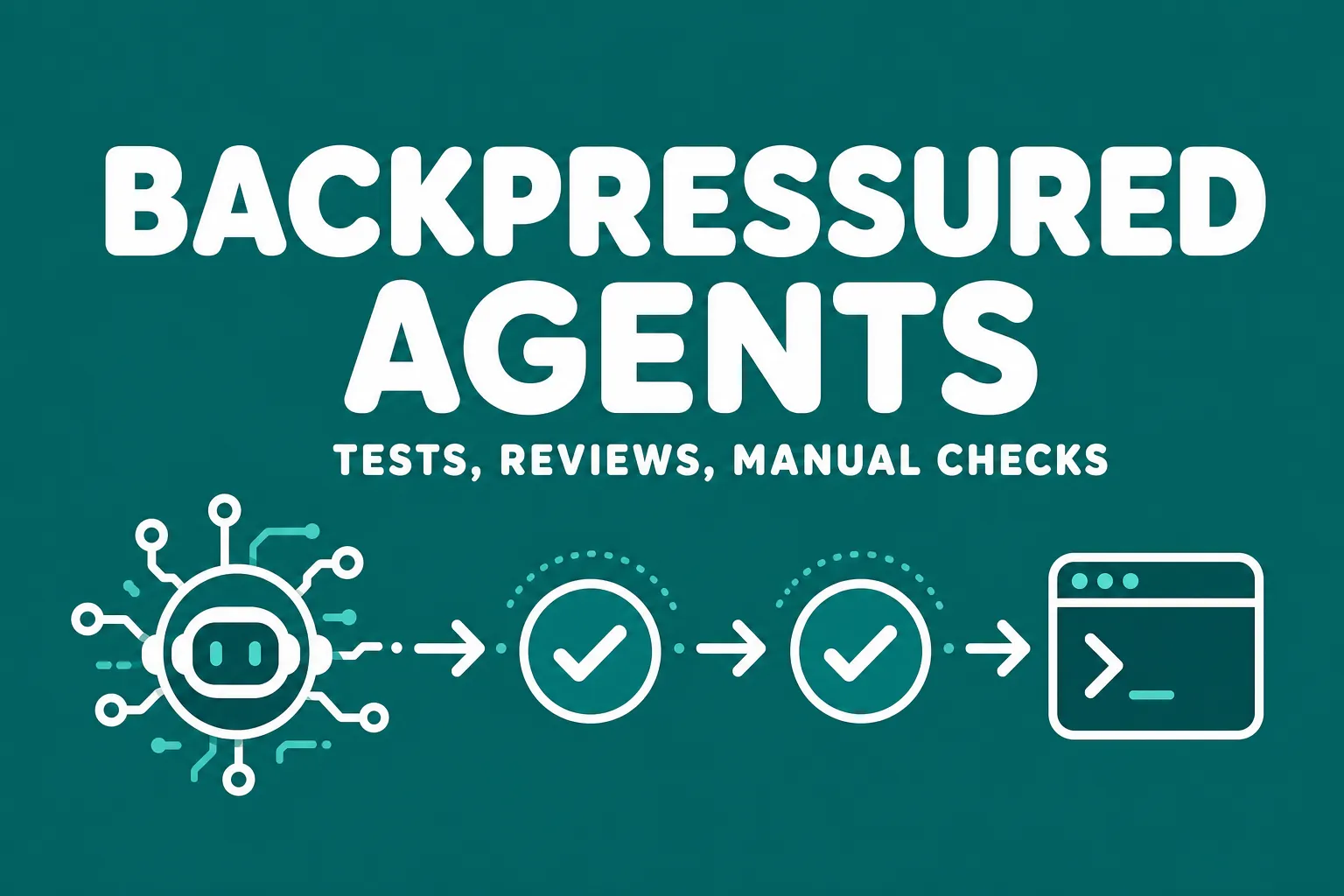
AI agents are moving from autocomplete into unattended implementation work. That shift is useful, but it creates a familiar reliability problem: producers can generate work faster than downstream consumers can safely absorb it. Lucas da Costa's post Backpressure is all you need and the related backpressured project frame this as an operations problem, not just a developer productivity trick.
What Is Backpressured?
Backpressured is a set of agent skills for longer unattended coding sessions. The idea is simple: make the agent run quality gates before it declares work done. Those gates can include linting, tests, type checks, benchmarks, code-review subagents, cURL checks, and browser testing.
For SRE teams, the useful part is the mental model. Backpressure is what keeps a queue, stream, or service dependency from being overloaded. The same pattern applies to AI-generated code. If the agent is the producer and reviewers are the consumers, then CI, tests, and review agents become the pressure signals that slow the producer down.
Key Features
- Iterative verification so the agent runs checks during the task, not only at the end.
- Project-specific rules through a
BACKPRESSURE.mdfile at the repository root. - Review skills for correctness, type design, tests, and simplicity.
- Manual verification steps using cURL or browser automation after automated checks pass.
- A workflow that treats green checks as a minimum bar before human review.
Installation
The project can be installed with npx:
npx @lucasfcosta/backpressured
Then run a backpressured goal in a supported coding agent:
/backpressured implement the alert routing change and verify it with tests
For production repositories, start by writing a small BACKPRESSURE.md:
Run npm test, npm run lint, and npm run type-check after each patch.
If any command fails, inspect the output and fix it before writing more code.
Before finishing, test the changed API with curl.
Operational Tips
Keep the first version boring. Add the commands your team already trusts: unit tests, type checks, policy checks, migration checks, and fast integration tests. Avoid a giant verification script that takes 40 minutes and gives vague output.
Make failures actionable. A good pressure signal tells the agent what broke and where to look. Structured test output, small benchmark suites, and clear review criteria work better than generic "quality" instructions.
Use this pattern for infrastructure code too. Terraform plans, Helm template checks, policy-as-code, Kubernetes dry runs, and synthetic probes can all act as backpressure before a change reaches an on-call engineer.
Conclusion
Backpressured agents are a practical response to AI-generated change volume. The goal is not to remove human review. It is to make sure humans review work that has already survived the obvious checks.
Akmatori helps SRE teams investigate incidents, automate operational workflows, and connect tools across their infrastructure. If you are building AI-assisted operations on Gcore or your own cloud stack, Akmatori gives your team an agentic control plane for faster, safer response.